
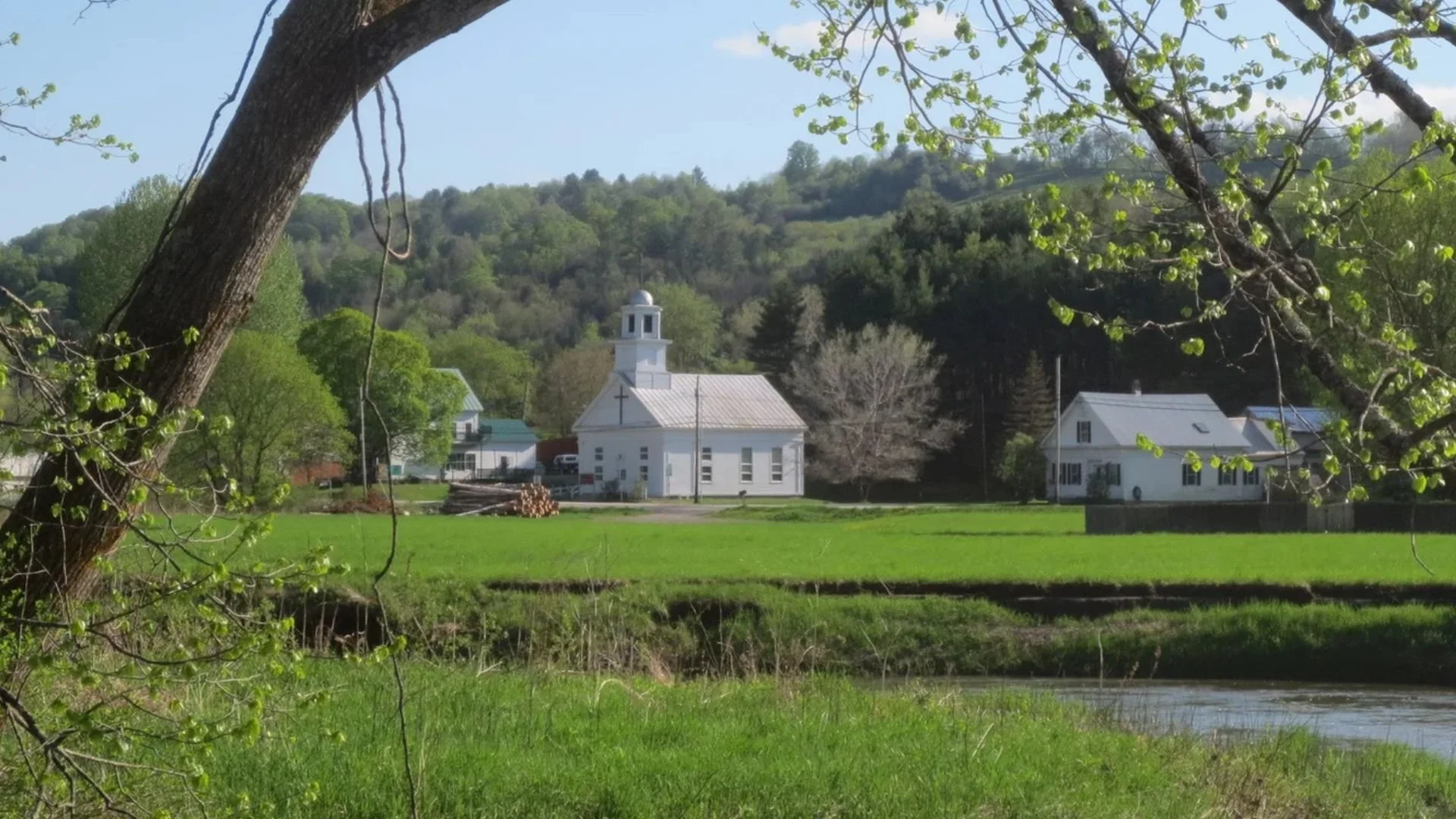
Marty has served as Pastor of East Randolph Baptist Church in Vermont for the past 24 years. Marty is one of our Small Town Summits Partners as well as Coaches. Rural New England churches that are “stuck” and need a pastor to come alongside of them can receive free coaching. Contact us HERE for more information about STS Coaching.
Tell us a little about your ministry in small-town New England.
My wife graduated from graduate school in August of 2002 and a week later we relocated from south-central Kentucky to East Randolph, Vermont, where we’ve been now for 24 years. We came to the church through a connection we had with Terry Dorset, who is now the Baptist Churches of New England Executive Director. The church was struggling. I think they were averaging about 12 people on a Sunday morning and trying to decide what next steps were. So, on my 29th birthday, my wife and I met with the small congregation in East Randolph and led a little Bible study and started the process of discussing pastoring with them. They didn’t have any sort of formal search committee. We just kept talking and both my wife and I thought this could be a strong possibility of next steps for us before we had children, so we moved to East Randolph and started ministry here. We have seen a lot of change and grown a lot with the congregation over these two decades plus.
What are some reasons that you love the small places?
One of the many blessings of rural ministry is you can get to know the people in your small place and be known by them. For example, this morning I went to the hardware store to get things we needed for a church project. One of the ladies there started attending church awhile back, and I’ve been discipling her son with another man. In a smaller place, you can not only get to know the people in your community, but you’re known by them—even people who might not be interesting in attending church at this point. You can start a process of a long-term relationship where you’re seeing these people on a fairly regular basis, which would be harder in a more urban setting. I love getting to know people and to be known by them in my small community.
What thrills your heart about the place God put you in?
After being here over 20 years, I see God doing things over a long period of time. Shortly after I moved here, there was a family in the church who had a lot of challenges and they ended up leaving the church. Their family kind of fell apart. One of our elders really warned them of the danger of the effects this would have on their children. It was not good for them, but God was at work over decades, and last Sunday I baptized their oldest daughter’s husband and they’re coming into membership this Sunday.
Seeing how God works over the long haul is not unique to a small area, but you can easily see the effects of God’s work in a way that you might not see with a larger population. You can see the layers of each individual that has an impact on a person and on a family. Seeing this young couple, who both grew up in very difficult environments, now starting their own family, and wanting to do things God’s way, is amazing. They have one child and another on the way, and I never would have thought that this young woman’s kids would be raised to know the Lord after seeing what happened 20 years ago in her family. Getting to have a front-row seat to that thrills my heart.
What are some of the difficulties you have come across in small-town ministry?
If the Lord is pleased to bless your church numerically, which he has been kind to do to us, a difficulty is that your philosophy of ministry and your shepherding style has to change as well. Your general leadership and admin needs to accommodate a growing church. That is currently a big challenge for me because I think you get to the threshold of a certain number and you can’t have those deep relationships with everybody in the church anymore. This is not unique to rural ministry, but if you’re going into a rural church, it is probably a smaller congregation. If God is pleased to bless it with numerical growth, the way you lead in the congregation and even in the community changes a bit.
How would you encourage a small-town pastor who is wondering if his ministry is worth it?
Just remembering the gospel call is worth it, and giving of our lives for these people in this community and in the congregation we serve is worth it. We have to stop navel gazing, being introspective, and feeling sorry for ourselves with the difficulties of ministry. We have to realize that following Jesus is a call to die and certainly that should be true of ministers of the gospel in small towns. It’s kind of basic Christianity 101, but we forget it every day.
Small-town ministry is worth it because Christ is worth it. There are those for whom Christ died in our community, who have yet to believe. If we’re not going to tell them, who is going to do it? Certainly, there are other qualified people to do it, but us quitting and leaving might mean we miss seeing people come to faith, and marriages and lives changed. But we have to keep getting over ourselves.
The thing that is going to keep us here is our love for the Lord and our love for the people. If you can’t love the people, you need to ask why. There’s a chance there needs to be some repentance in our own hearts. I think there’s very seldom a reason to leave. There are good reasons, like mission work, but not just to go to something that seems a little less difficult. I have found that in the seasons that I really wanted to leave, there was something really special around the corner that the Lord was getting ready to do. If I hadn’t hung in there by the grace of God, I would have missed it.

Marty Bascom
Marty has pastored the East Randolph Baptist Church since 2002 and has enjoyed seeing the church growing and understanding the truth and application of the gospel. Marty has four kids and was married to Julie in 1998. He grew up in New England and after a few years in Kentucky came back to serve in Vermont. Marty enjoys serving his small town and the way of life in rural Vermont.